“The model feeds fabrication directly now” is one of those claims that’s technically true and practically misleading at the same time. Structural models have exported machine-readable fabrication files for years. What changed in 2026 is how much validation and AI-assisted drafting sits around that export step, not whether a human is still checking the output before steel gets cut.
In 2026, structural detailing software added AI-assisted fabrication drawing generation, pre-shipment validation that blocks incomplete items from shipping, and simultaneous model-and-drawing editing. Models still export to CNC-compatible files like DSTV, DXF, or NC rather than feeding machines in real time, and full model-to-machine automation remains a stated future goal, not current practice.
Who this is for
This is for structural engineers and GCs who keep hearing that detailing software now “feeds fabrication directly” and want a straight read on what that phrase actually means in 2026, separate from how it’s marketed.
What the 2026 software release actually added
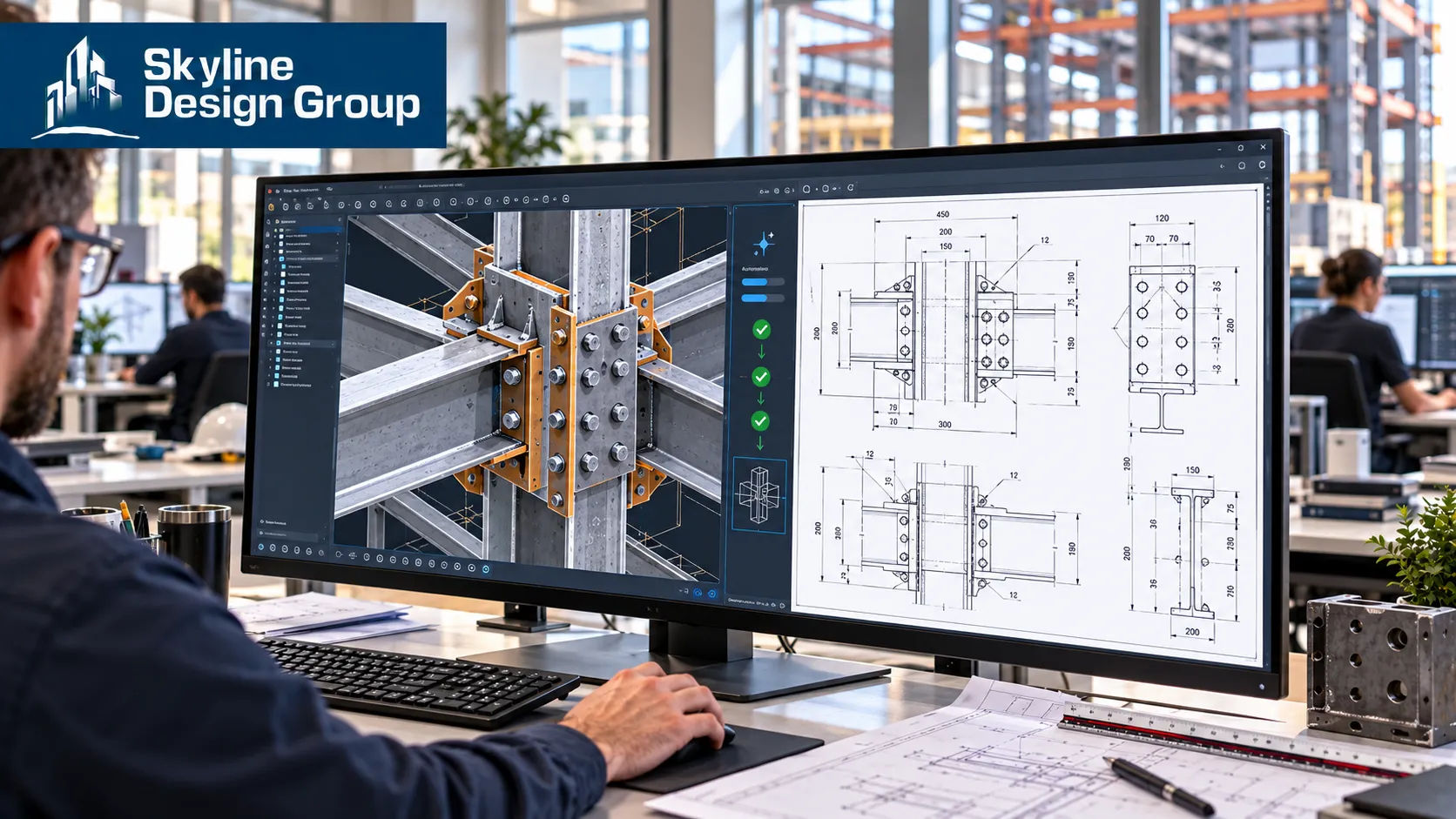
Trimble’s 2026 Tekla release, announced March 11, 2026, added several features that actually change a detailer’s workflow, even if none of them eliminate human review. AI Cloud Fabrication Drawings generates draft fabrication drawings from a library of past-project drawings, with a human verifying the top suggestions before anything moves forward, a “human in the loop” design rather than an autonomous one. Simultaneous model and drawing editing lets a detailer update the 3D model and the general arrangement drawing side by side, with changes reflected instantly in both, cutting out a round trip that used to cost real time on every revision. And on the fabrication side, PowerFab pre-shipment validation blocks items from shipping until every manufacturing step is confirmed complete, closing a specific failure mode where an incomplete piece reached the yard or the site because a step got skipped on the shop floor.
What “feeds fabrication directly” actually means today
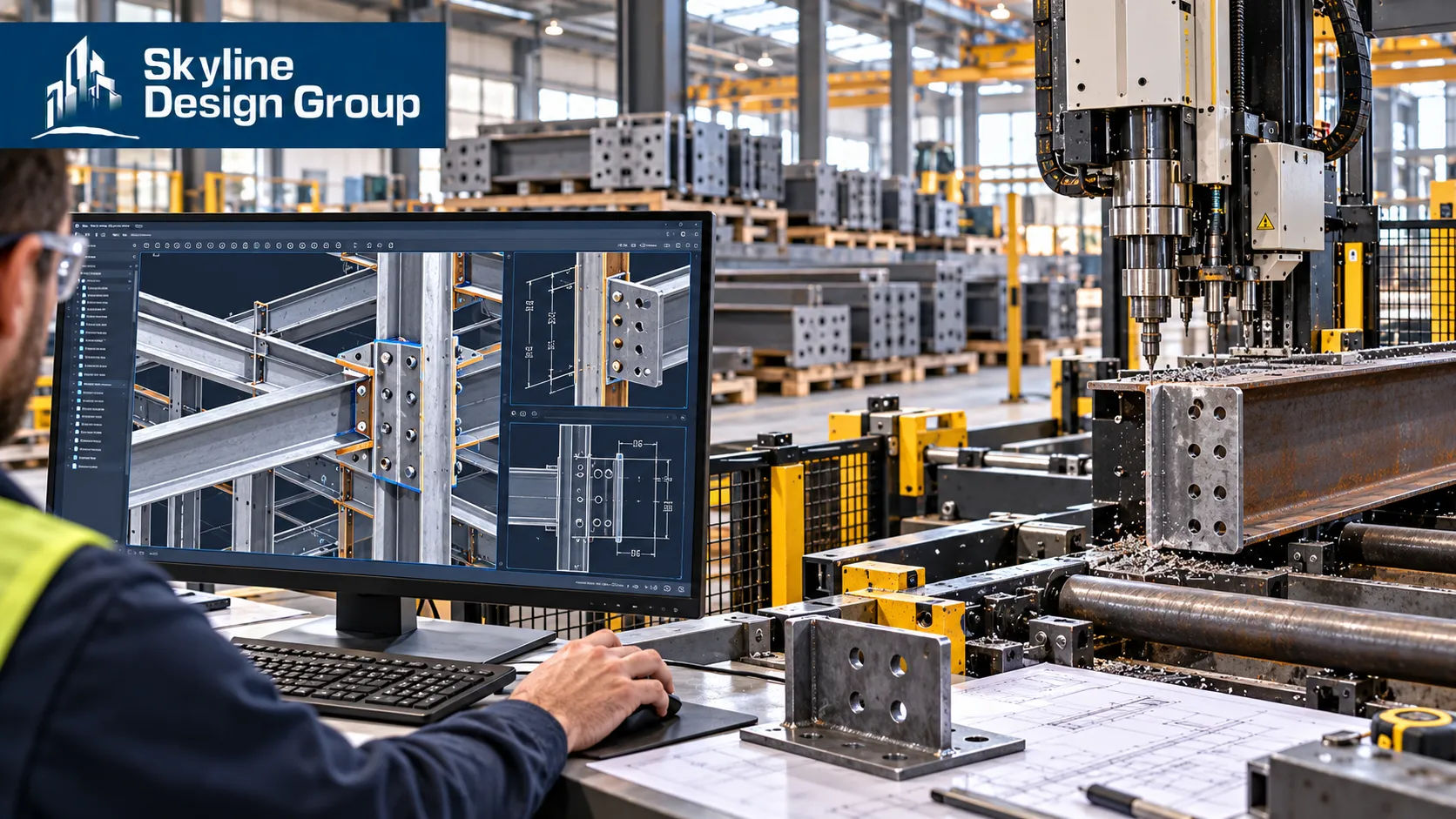
The mechanical reality behind the phrase hasn’t changed much: a structural model exports to machine-readable formats, commonly DSTV, DXF, or NC files, and those files are checked against the design before a machine operator programs them into fabrication equipment. That export step is real and has existed for years; what’s changed is how smoothly the model-to-export path runs, not whether a human still validates the result. Industry commentary on this exact workflow is direct about where the technology actually stands: fully automated workflows where a 3D model feeds CNC machines with minimal human intervention are described as a future development, not something currently in production use. Treat any claim of literal model-to-machine automation with that distinction in mind.
Why the validation step matters more than the automation claim
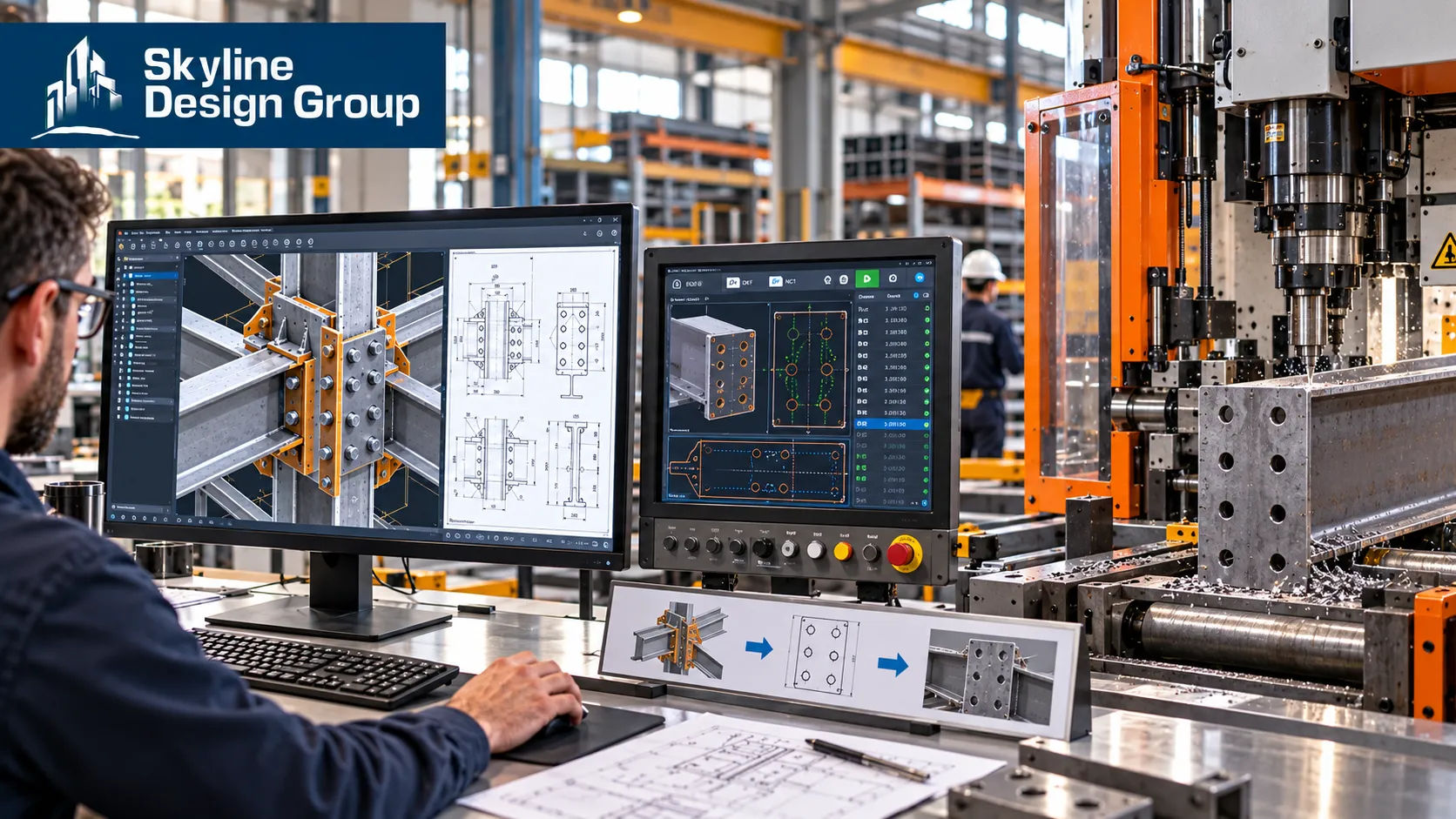
The real risk in this pipeline isn’t that a human is still involved, it’s what happens when an error in the model propagates downstream before anyone catches it. A model error doesn’t stay contained to the drawing it originated in; it carries into both the shop drawing and the CNC file derived from it, since both are generated from the same source geometry. That’s exactly why 2026’s most consequential features aren’t about removing the human from the loop, they’re about catching errors closer to the model and before fabrication: pre-shipment validation that blocks an incomplete item from shipping, and a layout-tolerance check that flags discrepancies like misaligned anchor bolts before steel reaches the site, rather than after a crew discovers the mismatch in the field.
| 2026 capability | What it actually changes |
|---|---|
| AI-assisted fabrication drawing generation | Speeds drafting; a human still verifies the output |
| Simultaneous model/drawing editing | Removes a manual round trip between model and GA drawing updates |
| Pre-shipment validation | Catches incomplete fabrication before it ships, not after |
| Layout/tolerance checking | Flags field-fit issues (like anchor bolt misalignment) before delivery |
| Model-to-CNC export (DSTV/DXF/NC) | Unchanged in principle; still requires file validation before machining |
What this means for a GC reviewing a 2026-built submittal
For a GC on the receiving end of a submittal built with these tools, the practical effect is speed, not a different review standard. A detailer using AI-assisted drafting and simultaneous model/drawing editing can turn around a revision faster than a manual process allowed, which can compress the review cycle on a tight schedule. It does not reduce what the GC needs to check: dimensional accuracy, connection details, and coordination against other trades still require the same scrutiny they always have, since the tools that speed up drafting are explicitly designed to keep a human verifying the result, not to certify it as error-free on their own. A faster drafting process is a scheduling advantage worth planning around; it is not a substitute for the review step on either side of the submittal, and treating it as one is how a fully avoidable field error slips through on a compressed schedule.
If you want to know how these 2026 changes might affect your next structural detailing scope, send us a scope: your current workflow and submittal process, and we’ll tell you plainly what’s worth adopting now and what’s still ahead of where the technology actually stands.