MEP Coordination vs MEP Design: Where the Engineer’s Job Ends and the Modeler’s Begins
A GC project executive gets a proposal that bundles “MEP design and coordination” into one line item and assumes it is one job performed by one kind of professional. It isn’t, and treating it that way is how scope gaps happen — usually discovered when nobody can say who was supposed to catch a conflict between the ductwork and the sprinkler main.
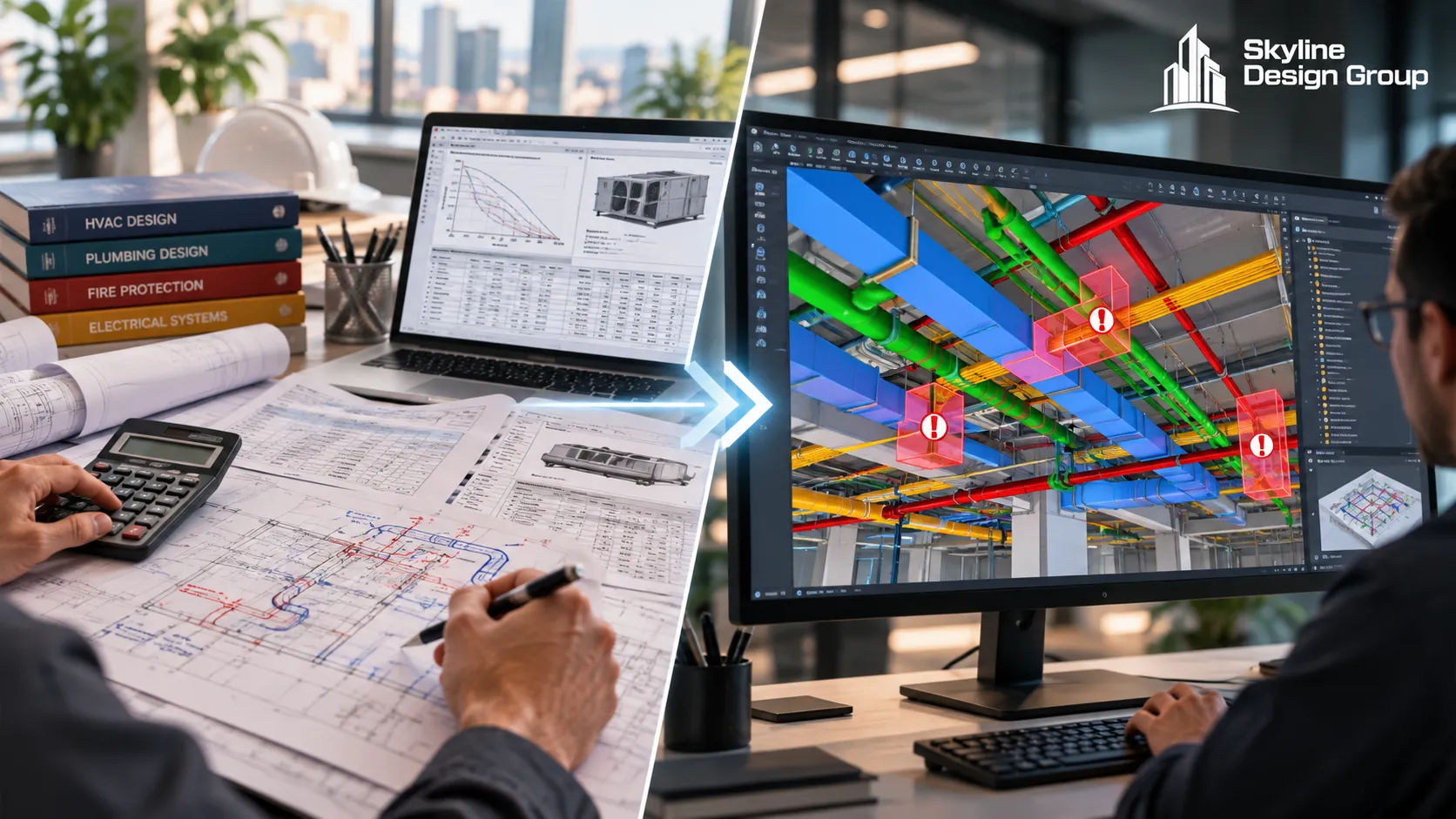
Design and coordination are two different disciplines working on the same systems at different points in the process, with different qualifications behind them and different liability attached to the work.
MEP design is engineering work: sizing equipment, laying out systems and calculating loads, done by a licensed mechanical, electrical or plumbing engineer in responsible charge. MEP coordination is the separate step of combining designed systems into one 3D model and resolving conflicts between trades. A production partner can model and coordinate; only the engineer of record can design and seal.
Who this is for
VDC managers and GC project executives who are scoping a coordination contract, and engineers who want to know exactly what they are and are not handing off when a production partner joins the project.
What does MEP design actually involve?
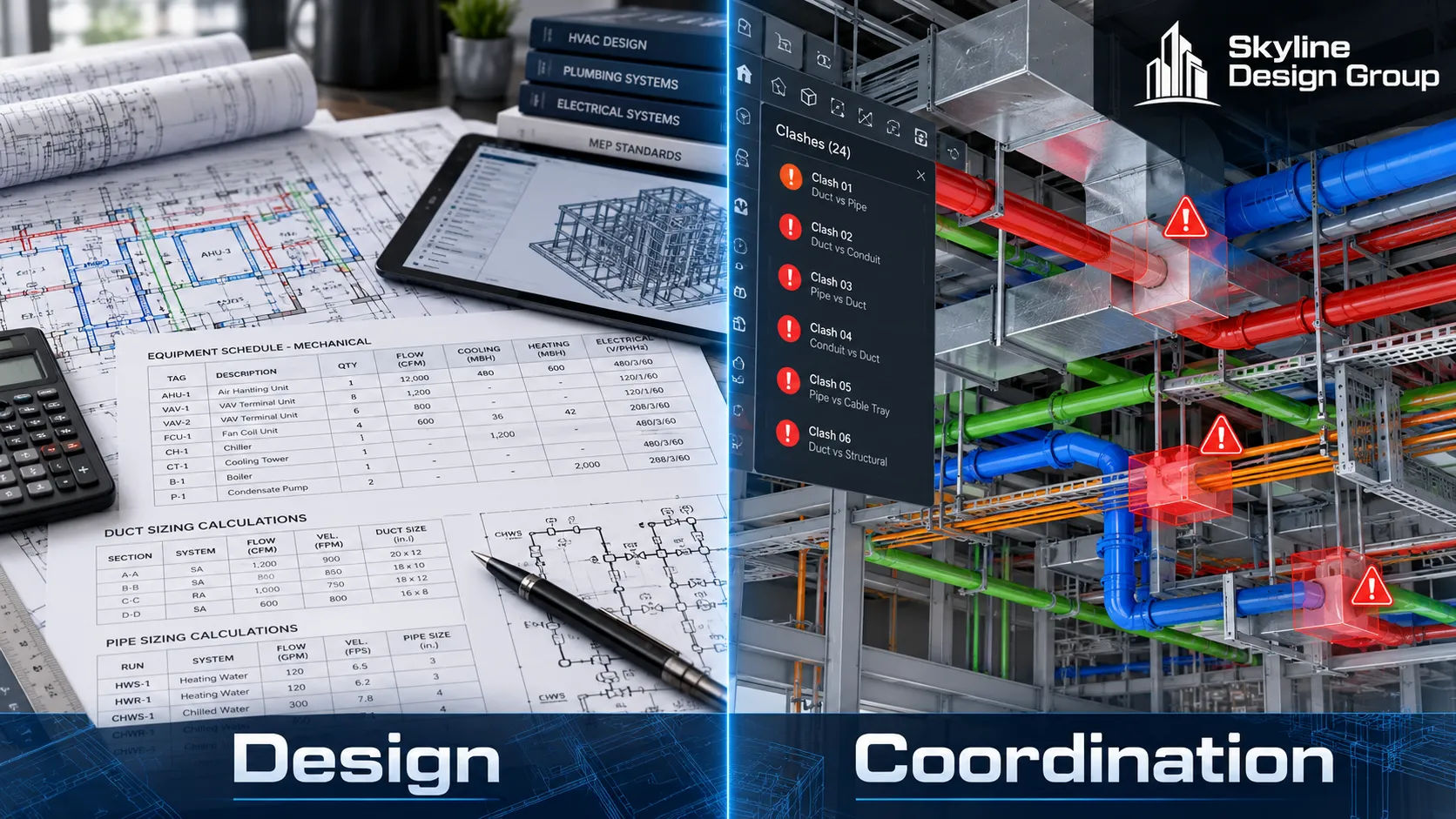
Design is engineering. A mechanical, electrical or plumbing engineer calculates loads, selects and sizes equipment, lays out the system to meet code and performance requirements, and produces the construction documents that specify what gets built. NCEES’s Model Law frames this as responsible charge: the direct control and personal supervision of engineering work, by someone with the knowledge and ability to assess the technical decisions being made. NSPE’s position statement on responsible charge goes further — reviewing a finished design after the fact is not the same as being in responsible charge of producing it. Design is a licensed, liability-bearing act from start to finish.
What does MEP coordination actually involve?
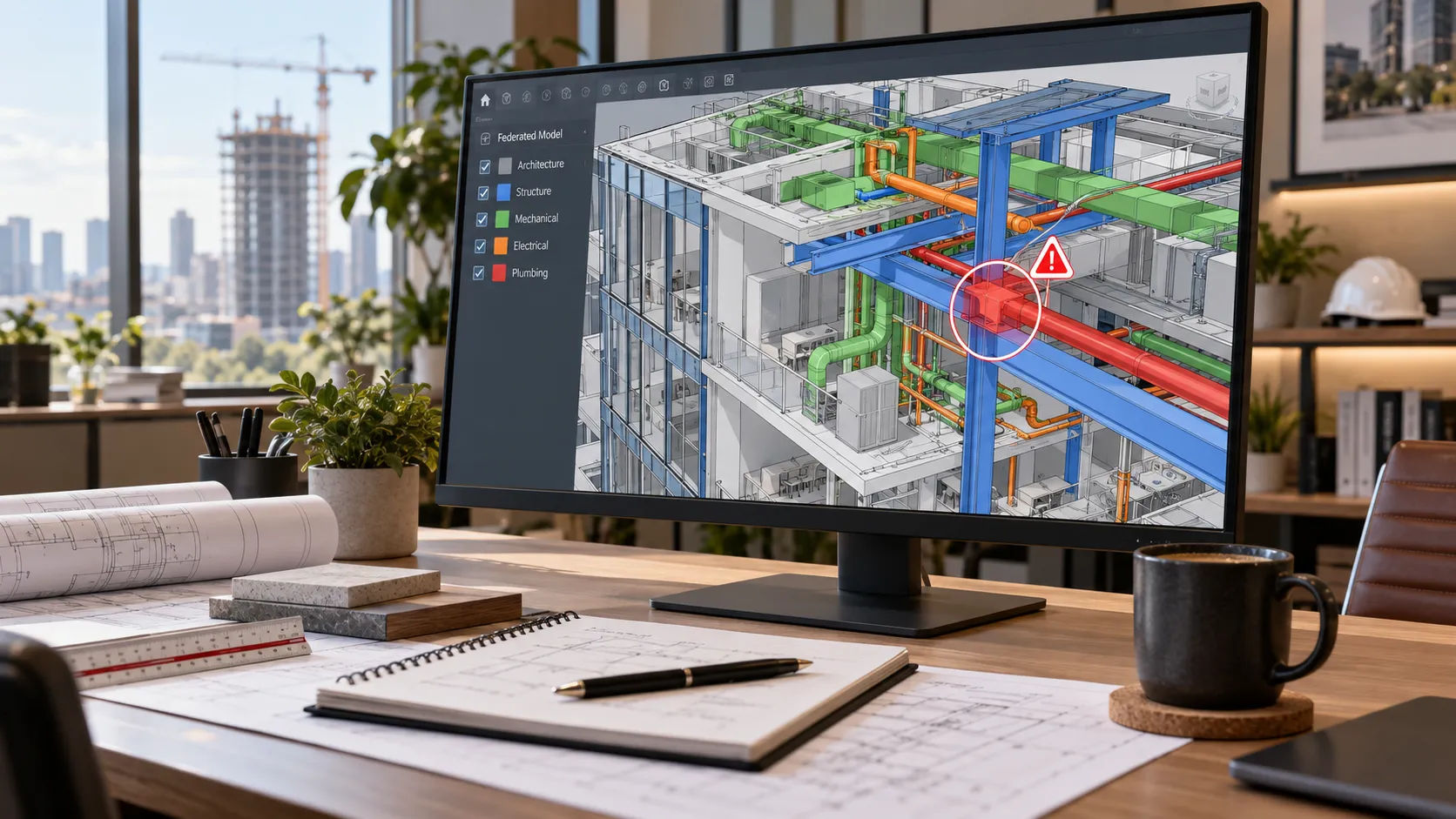
Coordination starts after each trade’s design exists in a usable 3D form. A coordination team (in-house VDC staff, a specialty contractor’s modeler, or an outsourced production partner) combines the mechanical, electrical, plumbing and often fire protection models into one federated model and checks them against each other and against structure and architecture for physical conflicts. A widely used industry reference on MEP coordination describes this directly: it is a multi-disciplinary collaboration to detect and resolve clashes before construction, not a design process in itself. The coordination deliverable is a clash report and an updated, conflict-free model — not a new design.
Where does the line actually sit?
The cleanest way to state it: design decides what the systems should be; coordination checks whether what got designed can physically fit together as built. A coordination pass can surface a problem (a duct and a structural beam in the same space), but the fix still has to respect the engineering behind it. If resolving a clash means re-sizing a duct, re-routing a line in a way that changes pressure or airflow, or anything that touches a load calculation or a code-required clearance, that decision routes back to the engineer of record. A production partner proposes a routing option; it does not re-engineer the system.
| What | Who does it | Typical output | Who can change it |
|---|---|---|---|
| MEP design | Licensed MEP engineer (engineer of record) | Sized systems, load calculations, stamped construction documents | Only the engineer of record |
| MEP coordination | VDC team or production partner | Federated model, clash report, coordinated drawings/isometrics | Engineer of record for anything load- or code-affecting; coordination team for routing and clearance fixes |
Why does a bundled proposal cause problems?
When a proposal lists “MEP design and coordination” as one line without separating the two, it tends to blur who is accountable for what. If a clash fix quietly changes a duct size without going back through the engineer, that change exists in the model with no engineering review behind it — which is exactly the kind of gap that shows up later as a failed inspection or an as-built that does not match the stamped set.
Ask any proposal that bundles these terms to separate them in writing: which line items are engineering (and whose seal is on them), and which are coordination (and who is doing the modeling and clash review). If a vendor cannot answer that split clearly, that is worth treating as a flag on its own.
Where this fits into a production partner’s scope
Skyline’s site documents MEP modeling and coordination as a service but does not publish example pricing for it [CLIENT TO CONFIRM]. If you are comparing proposals, ask for the coordination scope in writing, separate from any design line items, before comparing cost.
If you want a production partner who models and coordinates without touching the engineering, Request a Scope Review — send your current trade models or drawings, your software, and a note on which clashes (if any) you have already found manually.
For what a coordination deliverable set actually includes, see MEP modeling and coordination explained. For the broader scope split between an outsourced partner and the professionals of record, see who stamps the drawings. For how this compares to a general BIM coordination engagement, see BIM coordination services for general contractors.