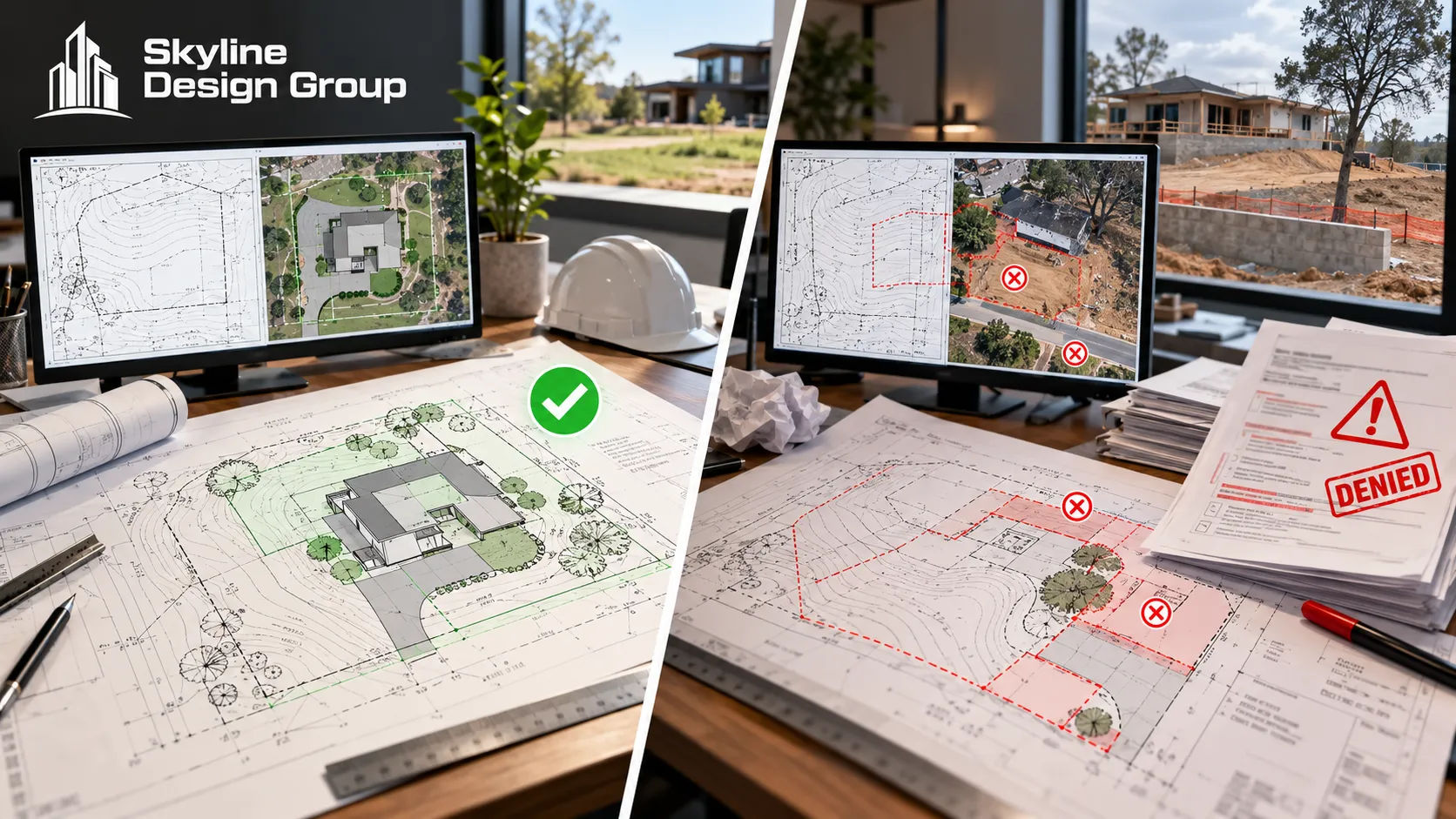
One city’s own permitting policy draws the line sharply: for a principal structure or an addition, the survey has to have been prepared within the last year, with an original seal — no exceptions beyond what the policy specifies. A survey from eighteen months ago, accurate as it may still be, simply doesn’t qualify there. A different context — commercial real estate lending — treats survey age far more flexibly, sometimes accepting a survey a decade old if the right conditions are met. Whether an old survey is reusable depends entirely on which of these contexts you’re actually in.
Whether an old survey can be reused depends on the specific rule governing the use, not a universal age limit. Some jurisdictions set a hard cutoff — one requires a survey within the last year for a principal structure or addition. Lenders often use softer criteria instead, sometimes accepting surveys up to a decade old. Check the specific rule first.
Who this is for
Civil engineers and developers deciding whether an existing survey on file is old enough to need replacing, or current enough to build a new project’s permit application or financing on.

What actually determines whether an old survey can be reused?
Not a single universal rule — a specific rule tied to the specific use. A city permitting policy (City of Greenacres, Florida) sets a hard one-year requirement for a principal structure or addition permit, with an original seal, and no exceptions beyond what the policy allows. That’s a bright-line rule: past one year, the survey doesn’t qualify for that purpose in that jurisdiction, regardless of how accurate it still is.
Commercial lending works differently. A legal analysis of survey-age practice in real estate financing describes title company underwriting guidelines that accept an older survey without requiring an update when several conditions are met together: no new construction on the property, a satisfactory affidavit confirming that, acreage under a set limit, and the survey itself no more than roughly a decade old with fieldwork no older than about two years. That’s a conditions-based rule, not a fixed cutoff — and the same source notes that how strictly it gets applied can shift with the lending market, with both lenders and title companies sometimes bending standards further when financing is competitive.
What’s a realistic set of conditions an old survey needs to meet?
Using the lending-context criteria as an illustrative example (not a universal standard — your specific lender, title company or jurisdiction may set different thresholds):
| Condition | What it checks |
|---|---|
| No new construction | Nothing has been built or demolished on the property since the survey |
| Satisfactory affidavit | A sworn statement confirms no changes, standing in for a fresh field check |
| Acreage limit | Smaller properties are often treated more leniently than large ones |
| Survey age | Often capped around a decade for the document itself |
| Fieldwork age | Capped more tightly than the document itself, often around two years |
None of these numbers should be assumed to apply outside the lending context they came from. A permitting jurisdiction, a different lender, or a different title company can set entirely different thresholds — which is exactly why checking the specific rule matters more than remembering a general number.

What’s the actual cost of guessing wrong?
In the permitting context, guessing wrong means the application gets rejected and the survey has to be redone before the permit moves forward — a direct, immediate cost measured in schedule, not just money. In the financing context, the cost is less visible but potentially larger: a title company accepting an old survey doesn’t make the underlying risks disappear. The same legal analysis flags specific risks that persist even when an old survey gets accepted — encroachments built after the survey date, easements recorded since, and adverse possession claims from unauthorized use of the property that the original survey never could have captured.
Where this fits into a production partner’s scope
If you have an existing survey and aren’t sure whether it’s current enough for your next project, Request a Scope Review — send what you have and the specific permit or financing requirement it needs to meet, and get back a clear read on whether it holds up.
For what to check in any survey file before designing from it, see 6 things to check in a survey file. For how a flat or outdated survey gets turned into a usable current CAD file, see topographic survey digitization explained.